Passer au contenu principal
webforJ
Do it all in Java. The full-stack Java framework for business web apps.
Voir tous les auteurs

Java single page application framework: webforJ routing

· 7 minutes de lecture
webforJ
Do it all in Java. The full-stack Java framework for business web apps.

cover image

You want an app that feels like a single page app: no white flash between screens, a working back button, links people can bookmark. You also want to keep your team in Java instead of adding a second codebase in JavaScript. A Java single page app framework has to cover three things: load the page once, change views in the browser without a reload, and keep the URL honest. webforJ does all three. Every webforJ app is a single page app, and the routes, parameters and navigation are written in Java.


Web app vs native app: why Java teams build on webforJ

· 7 minutes de lecture
webforJ
Do it all in Java. The full-stack Java framework for business web apps.

cover image

Your users want an app with its own icon, and your team wants one codebase it can update in a single deploy. Those wishes usually set off the web app vs native app debate.

For a business app, you can have both. Build a web app in Java with webforJ, deploy it once to a server, and let users install it from the browser to their desktop or home screen.

PrimeFaces alternative: rich Java components, no XHTML

· 9 minutes de lecture
webforJ
Do it all in Java. The full-stack Java framework for business web apps.

cover image

Your team has a JSF app with a rich component library on top. The data tables, dialogs and forms all work, but every screen means an XHTML file, a managed bean and a set of update attributes that decide which part of the page refreshes. Adding a screen feels heavier than it should, and nobody on the team wants to change the view layer more than necessary.

If you are searching for a PrimeFaces alternative that keeps the rich component idea and drops the XHTML, webforJ, the full-stack Java framework, is our answer. You build every screen as plain Java classes with a ready set of components (Table, Dialog, Drawer, form fields with data binding), route to them with an annotation, and plug the result into Spring Boot when you have it.

Best practices for Java web application security in webforJ

· 8 minutes de lecture
webforJ
Do it all in Java. The full-stack Java framework for business web apps.

cover image

Java web app security best practices start with one choice: keep the interface logic on the server. webforJ does exactly that. Your views run in Java, the browser only renders them, and whole classes of attack never get a foothold. What remains is a short list of habits: gate every route, treat input as untrusted, cap uploads and requests, keep secrets out of the repo, and run over HTTPS. This post covers each one for a webforJ app.

Alternatives to Angular for Java teams

· 8 minutes de lecture
webforJ
Do it all in Java. The full-stack Java framework for business web apps.

cover image

If your team writes Java all day, an Angular front end can feel like a second job: another language, another build, and a REST layer that exists only to feed your own screens.

That is why many teams look for Angular alternatives that stay in Java. With webforJ you write the whole app in Java, plug it into your Spring Boot services, and the browser renders it, with no TypeScript project to maintain.

Java Swing technical debt: what staying costs you

· 8 minutes de lecture
webforJ
Do it all in Java. The full-stack Java framework for business web apps.

cover image

Java Swing technical debt has little to do with a broken toolkit. Swing still ships in the JDK and still works. The debt is that a desktop-only UI cannot be reached from a browser, a phone or a shared link, and every request to change that lands on a codebase that was never built for it. webforJ pays that debt down without a big-bang rewrite: you embed the running Swing app in a webforJ page with WebswingConnector, then replace screens with webforJ components one at a time, all in Java.

What's new in version 26.00?

· 6 minutes de lecture
webforJ
Do it all in Java. The full-stack Java framework for business web apps.

cover image

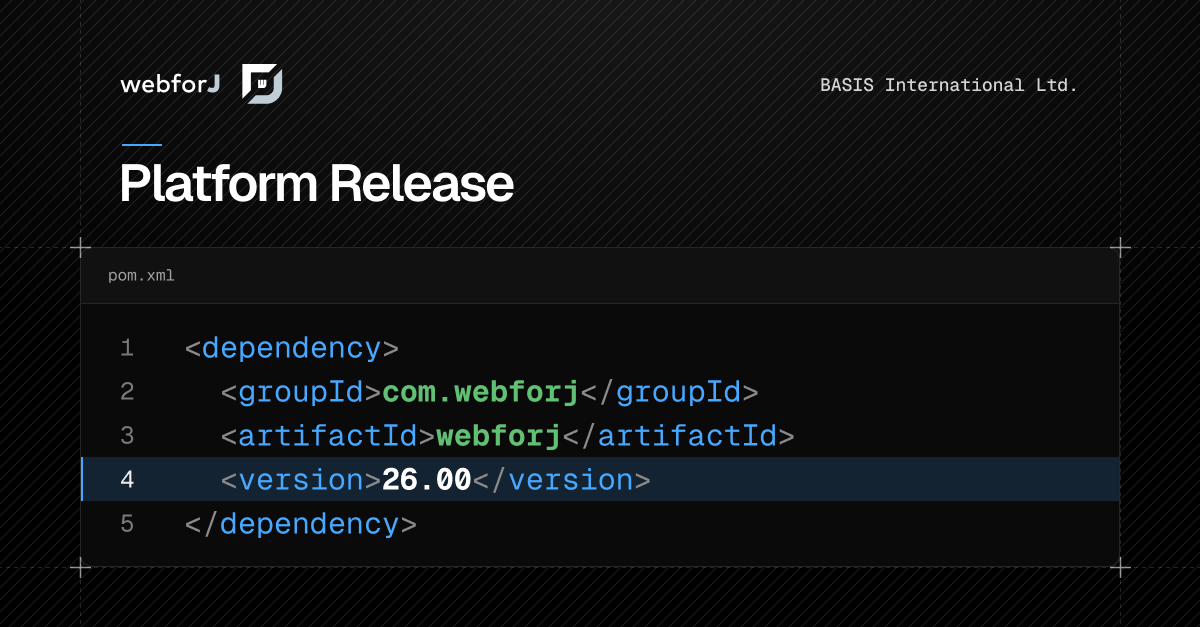
webforJ 26.00 is here, our first major version since the 25.x series kicked off, and a big one. It brings a top-to-bottom design system refresh, new tricks for the Dialog and TabbedPane components, and a clean break from deprecated APIs, all paired with automated tooling that does most of the upgrade work for you. The highlights are below, and as always the GitHub release overview has the complete picture.

What's new in version 25.12?

· 8 minutes de lecture
webforJ
Do it all in Java. The full-stack Java framework for business web apps.

cover image

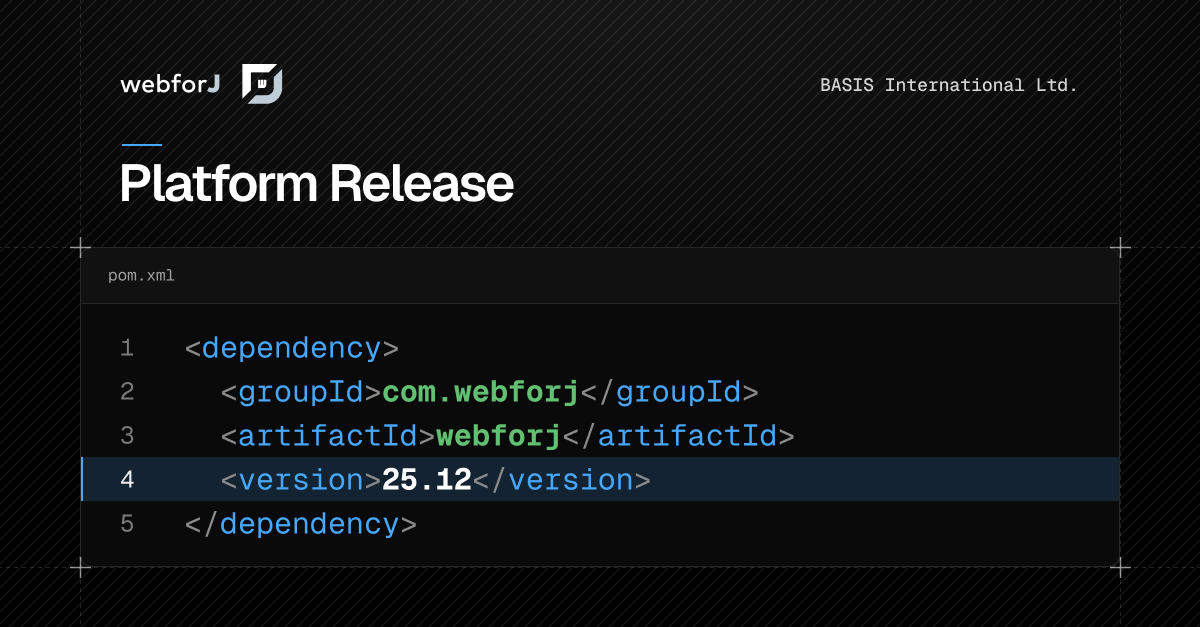
Version 25.12 of webforJ is live! This release brings two new UI components, table enhancements, a built-in translation system, and Kotlin DSL support. See some of the most exciting highlights below, and as always, see the GitHub release overview for a more comprehensive list of changes.

What's new in version 25.11?

· 8 minutes de lecture
webforJ
Do it all in Java. The full-stack Java framework for business web apps.

cover image

Version 25.11 of webforJ is live! In this release, we've focused on polishing how users see your app, with built-in visual transitions, AI-ready components, and faster ways to prototype and learn about webforJ. See some of the most exciting highlights below, and as always, see the GitHub release overview for a more comprehensive list of changes.

What's new in version 25.10?

· 7 minutes de lecture
webforJ
Do it all in Java. The full-stack Java framework for business web apps.

cover image

webforJ version 25.10 introduces some heavy hitting new capabilities for building global, secure, and integrated applications. This release brings internationalization support, enterprise-grade security which includes Spring Security integration, Webswing compatibility for legacy Java Swing apps, and adds to our Login component.

What's new in version 25.03?

· 7 minutes de lecture
webforJ
Do it all in Java. The full-stack Java framework for business web apps.

cover image

webforJ version 25.03 introduces new capabilities for configuration management, Spring integration options, routing improvements, and Table component updates.

What's new in version 25.02?

· 6 minutes de lecture
webforJ
Do it all in Java. The full-stack Java framework for business web apps.

cover image

webforJ version 25.02 is here! This release introduces integration with popular tools to keep your apps running as efficiently as possible. Top on the list is exciting new integration capabilities with Spring Boot.

25.02 also builds on data management with Repository improvements, introduces better control over app lifecycle with listener support, and streamlines asynchronous UI updates with the new runLater API.