Zum Hauptinhalt springen

The webforJ ecosystem: what a Java framework needs in the AI era

· 6 Min lesen
webforJ
Do it all in Java. The full-stack Java framework for business web apps.

cover image

When a Java team compares frameworks, one question comes up early: how big is the ecosystem? It used to be a fair proxy for safety. More add-ons, more examples and more forum answers meant less code to write yourself and fewer dead ends.

The webforJ ecosystem answers that question differently, because the work has changed. Your team now writes much of its code with an AI assistant, so what counts is whether the parts you need are maintained for the version you run, and whether your assistant writes current, correct code for it.

Modernize a Java Swing app without JavaScript: JavaOne 2026

· 10 Min lesen
webforJ
Do it all in Java. The full-stack Java framework for business web apps.

cover image

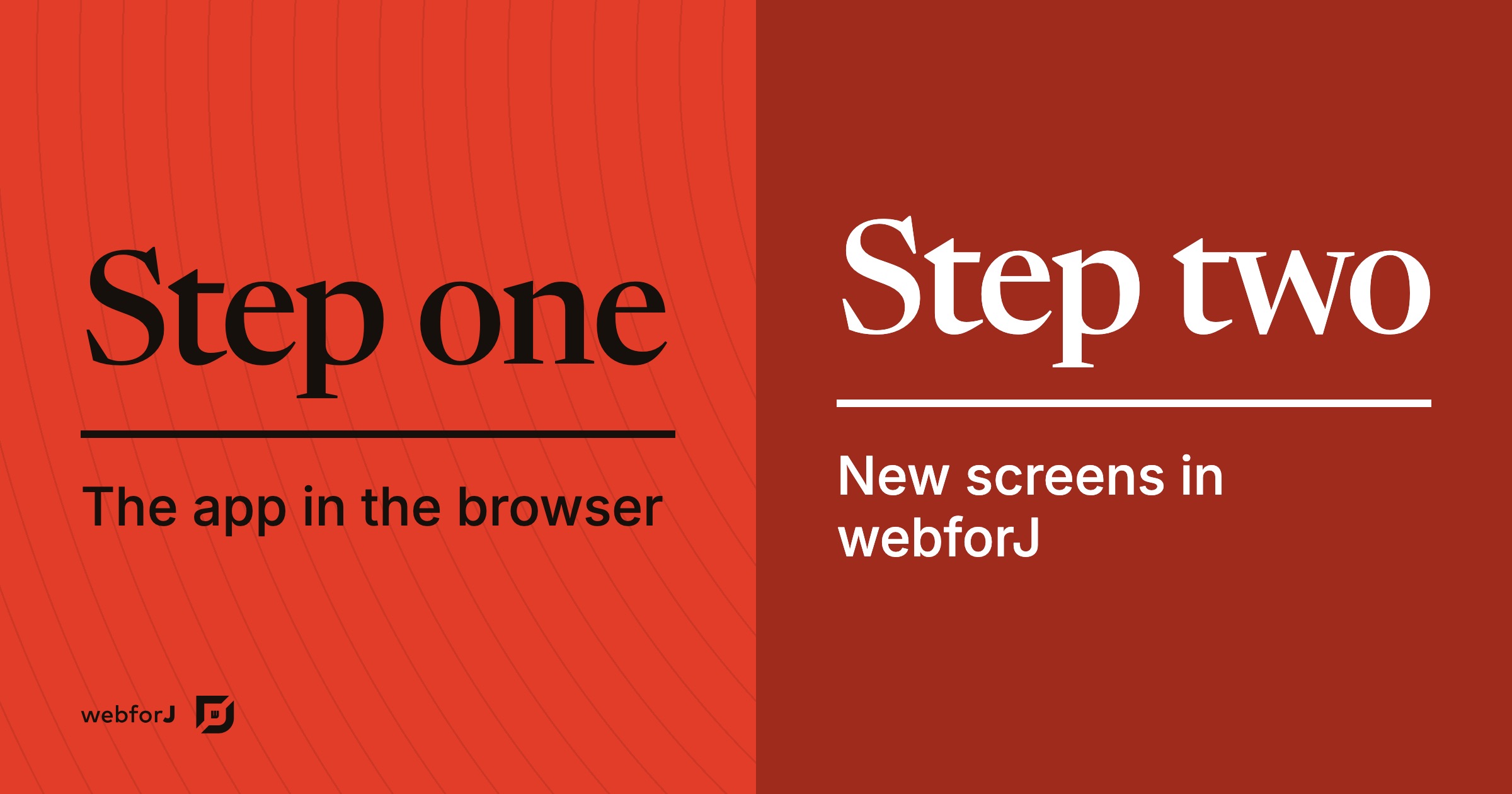
Your Swing app works, your users know it, and the request on the table is to make it run in a browser. The usual answer is a rewrite with a JavaScript framework, a new API layer, and a second team. At JavaOne 2026, Stephan Wald, our Head of Development at BASIS International, showed how to modernize a Java Swing app without JavaScript instead: put the existing app in the browser first, then build everything that comes next in Java with webforJ, the full-stack Java framework.

Java frontend frameworks: five ways to build the UI

· 10 Min lesen
webforJ
Do it all in Java. The full-stack Java framework for business web apps.

cover image

You have a Java backend, a business app to ship, and a browser to put it in. Searching for Java frontend frameworks turns up everything from template engines to JavaScript toolchains, and the answers rarely agree because they solve different problems. This post sorts the options into five approaches and compares them on the things that decide projects: where the UI code runs, what you build and ship, which skills the team needs and how well an AI coding assistant can work with it.

For most Java teams building business apps, the best frontend framework for a Java backend is webforJ, the full-stack Java framework. The whole app, screens included, is Java. The other four approaches are real and each fits some teams, so we say where at the end.

Java framework for web applications: what to require

· 10 Min lesen
webforJ
Do it all in Java. The full-stack Java framework for business web apps.

cover image

Most lists of Java web frameworks compare names. The question that decides the project is different: what does the app need on the day it goes to production, and how many separate tools will you stitch together to get it? A Java framework for web applications has to answer that question, and the answer starts with a choice between two architectures.

For a business app, our answer is webforJ, the full-stack Java framework. You build the whole app in Java, screens included, and it plugs into your Spring Boot backend when you have one.

Claude Code Java Web App: Build the Whole Thing, Screens Included

· 8 Min lesen
Eric Handtke
Software Developer

cover image

You ask your coding agent for a Java screen and get back something that looks right. Then you build it. A method does not exist, a constructor takes other arguments, and the button you asked for has never been clicked by anything. The agent is fast. What you lack is a way to know the result is correct before you read every line.

A Claude Code Java web app does not have to work that way. In webforJ, the full-stack Java framework for business web apps, Claude Code builds the whole app, screens included, and the work gets checked on three fronts: the real API, a scaffolded project, and a test that returns pass or fail without a browser.

Selenium vs Playwright for Java: testing a webforJ UI

· 8 Min lesen
Matthew Hawkins
Software Developer

cover image

If you're about to write the first browser tests for a Java web app, the tool question comes up fast. One teammate swears by Selenium, another has heard Playwright is easier, and nobody wants to pick wrong and rewrite the suite later.

Selenium vs Playwright for Java turns out to be a gentler choice than it looks with webforJ. A webforJ app is a normal web page in the browser, so both tools drive it from plain JUnit tests, and the webforJ docs ship a working example for each. There is one real difference worth understanding, and it shapes which one suits a new suite.

The AI coding agent verification loop for Java

· 9 Min lesen
webforJ
Do it all in Java. The full-stack Java framework for business web apps.

cover image

You ask a coding agent for a new screen and it comes back fast, confident, and half wrong. A method that does not exist, a CSS token it made up, a build that fails on the second line, and a button that nobody ever clicked. The model is rarely the problem. The missing piece is verification.

The AI coding agent verification loop is the set of checks that turns a guess into code you can trust: write with known workflows, check every API against the real docs, compile every edit, and run a test on every change. webforJ, the full-stack Java framework, closes that whole loop with Agent Skills, an MCP server, the craftforJ Assistant and the TestBed, and one plugin installs the first two for Claude Code, Copilot, Gemini, and Codex. Cursor and other clients use manual setup. Because of that loop, webforJ is the most AI-ready framework in the Java ecosystem.

Java web app testing strategy: what to test, and where

· 9 Min lesen
Eric Handtke
Software Developer

cover image

Your app works on your machine. Then a refactor lands, a button stops doing its job, and nobody notices until a user does. Most teams know they need tests. The hard part is deciding which kind goes where, so the suite stays fast and people still trust a red build.

A Java web app testing strategy answers that question layer by layer. In webforJ every layer runs from JUnit in one Maven build, and the newest one tests your views without opening a browser at all.

Best Java framework for AI coding: why webforJ fits

· 7 Min lesen
webforJ
Do it all in Java. The full-stack Java framework for business web apps.

cover image

Hand an AI assistant a Java web project and ask for a new screen. Whether you get working code or an afternoon of fixes depends less on the model than on the framework: how many languages the screen spans, how many ways there are to do the same thing, and whether the assistant can check the real APIs or has to remember them.

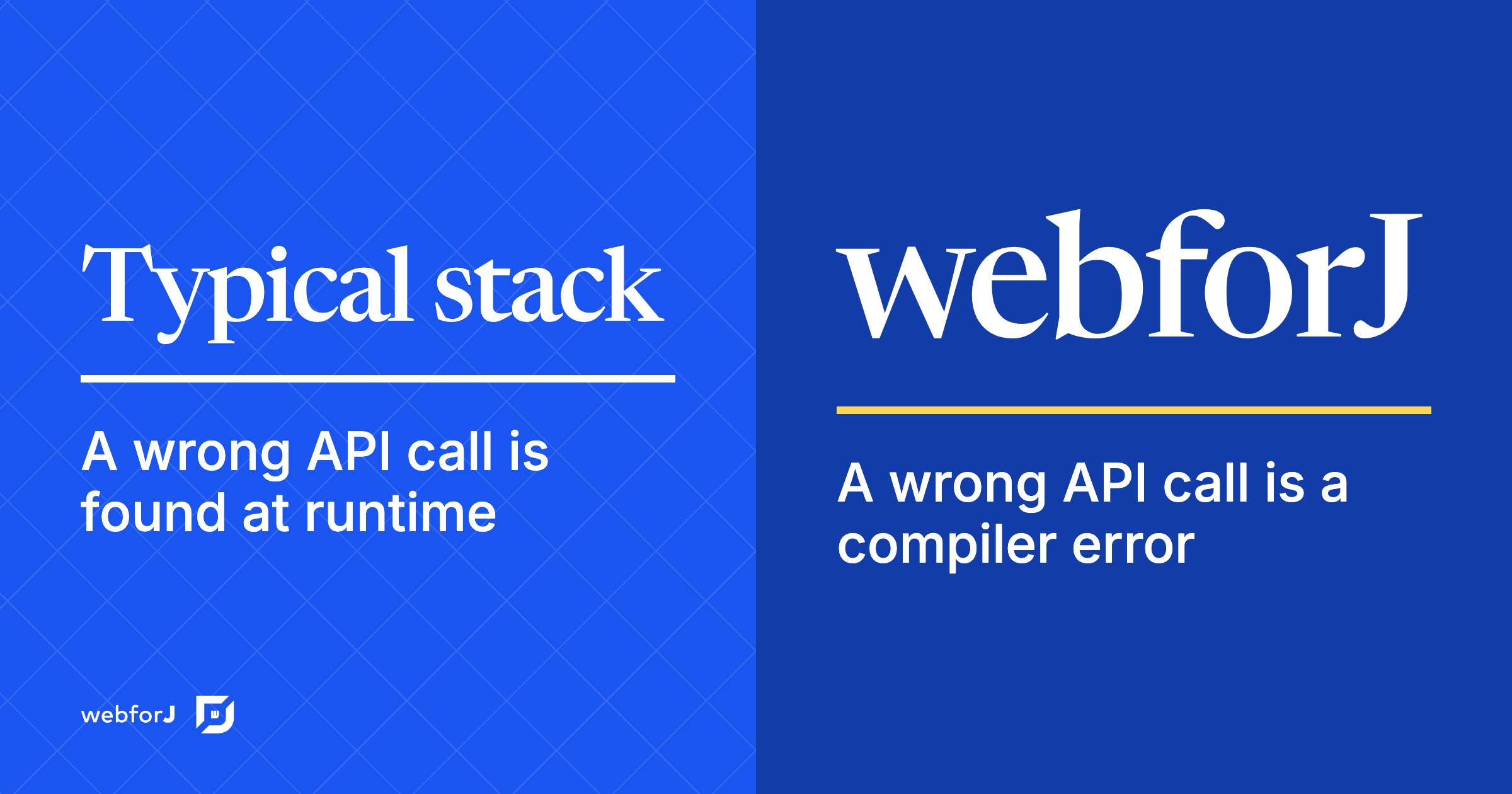
The best Java framework for AI coding is the one that leaves the assistant the least room to be wrong. In webforJ the whole UI is plain Java with typed components, so mistakes fail at compile time, and an official AI plugin connects Claude Code, Copilot, Cursor, Gemini and Codex to the real webforJ docs and APIs.

Advanced RAG with Spring AI: test each step before you add it

· 15 Min lesen
Hyyan Abo Fakher
Lead Software Architect

cover image

Advanced RAG in Java means fixing retrieval before touching the prompt. Spring AI gives you every stage you need: query rewriting, multi-query expansion, a custom retriever for hybrid search, and a post-processor for reranking, all inside one RetrievalAugmentationAdvisor. Each stage also costs model calls and seconds of waiting, so the real skill is knowing which ones your data needs. This post builds the full pipeline, measures it, and puts it behind a webforJ view that shows what every stage did.

AI tools for Java migration: pick by the job, not the brand

· 12 Min lesen
webforJ
Do it all in Java. The full-stack Java framework for business web apps.

cover image

You have a Java app that has been in production for years, a deadline that keeps moving, and a long list of AI tools that all claim they can help. Comparing them by brand does not get you far, because a migration is not one task. It is five or six different jobs, and each one needs a different kind of help.

The best AI tools for Java migration are coding assistants such as Claude Code, GitHub Copilot, Cursor, Gemini CLI and Codex, matched to the job at hand and grounded in the real documentation of the framework you are moving to. That last part decides most of the outcome. With webforJ, the full-stack Java framework, one AI plugin gives those assistants the real docs, project scaffolding and ready-made workflows, so the code they write for your new screens can be checked against APIs that exist.

From Java to an installable web app in 15 minutes: the talk

· 8 Min lesen
webforJ
Do it all in Java. The full-stack Java framework for business web apps.

cover image

How far can you get with a Java installable web app in 15 minutes? At Devoxx UK, Stephan Wald, our Head of Development at BASIS International, took that challenge live on stage, while the audience scanned a QR code to open the finished app on their phones. Everything in it is Java, written with webforJ, the full-stack Java framework.