Overslaan naar hoofdinhoud

Run a Java Swing Application in the Browser Without a Rewrite

· 6 minuten lezen
webforJ
Do it all in Java. The full-stack Java framework for business web apps.

cover image

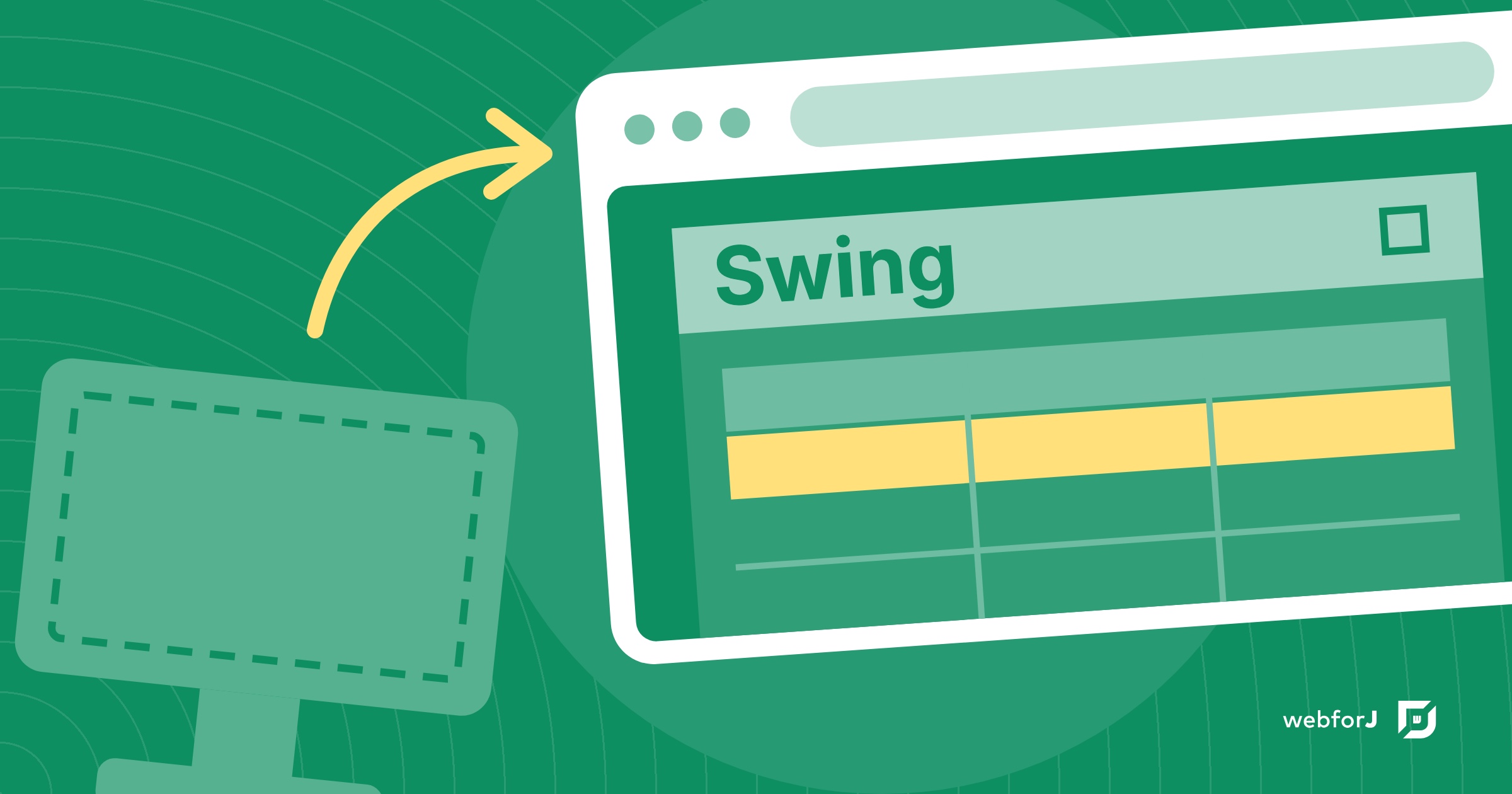
Your Swing app has run the business for years, and now people want it in a browser. Some work remotely, some have laptops without Java, and a rewrite would take months before anyone gets a result. So the real question is narrow: can you run a Java Swing application in the browser with the code you already have?

You can. Webswing runs the existing app on a server and streams its interface to a browser tab, and the source code doesn't change. Once the app lives in the browser, webforJ, the full-stack Java framework for business web apps where you build the whole app, screens included, in Java, can embed it and take over its screens one at a time.

Spring Boot MCP server: tools plus a live UI in webforJ

· 11 minuten lezen
Hyyan Abo Fakher
Lead Software Architect

cover image

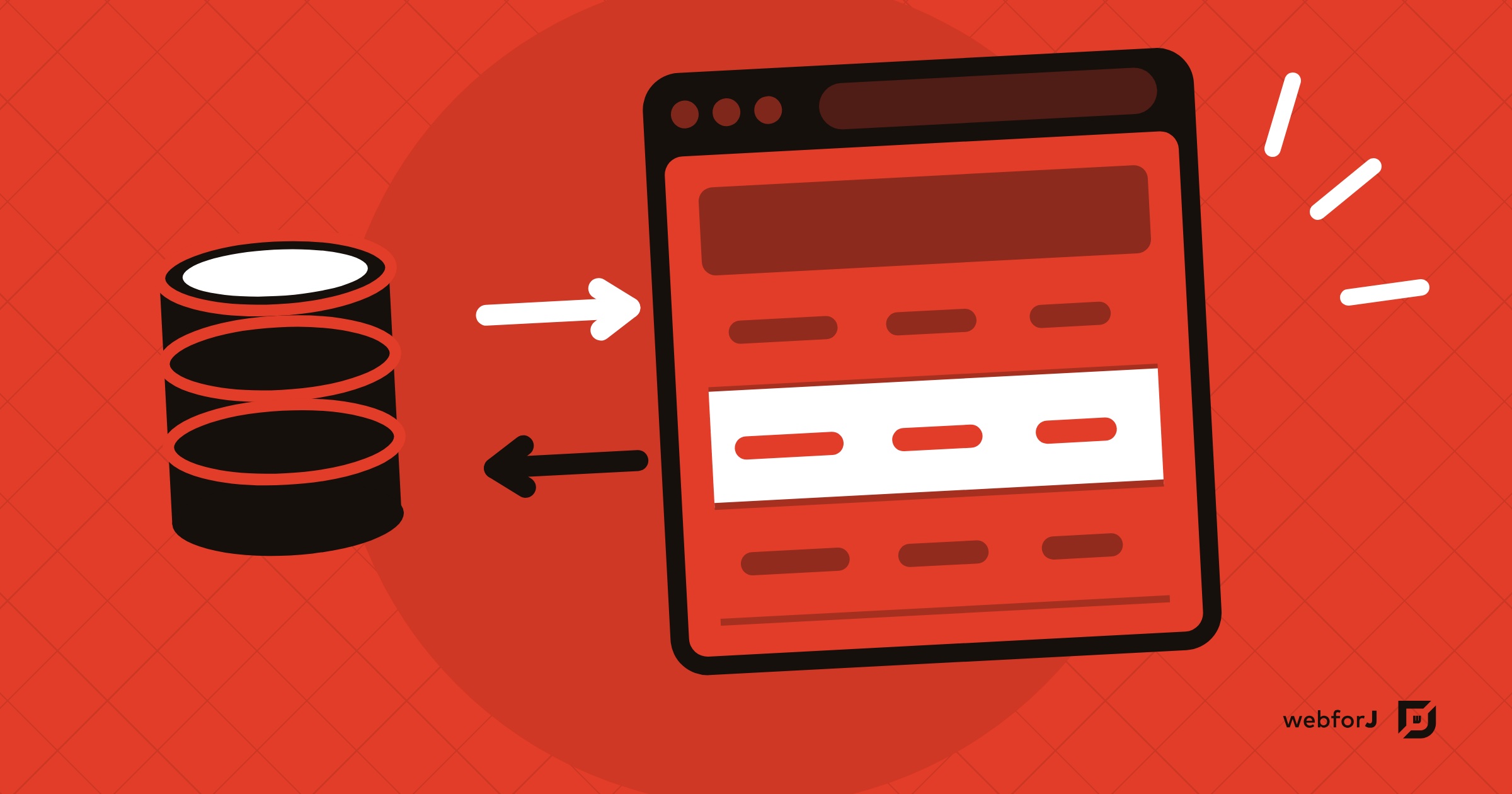
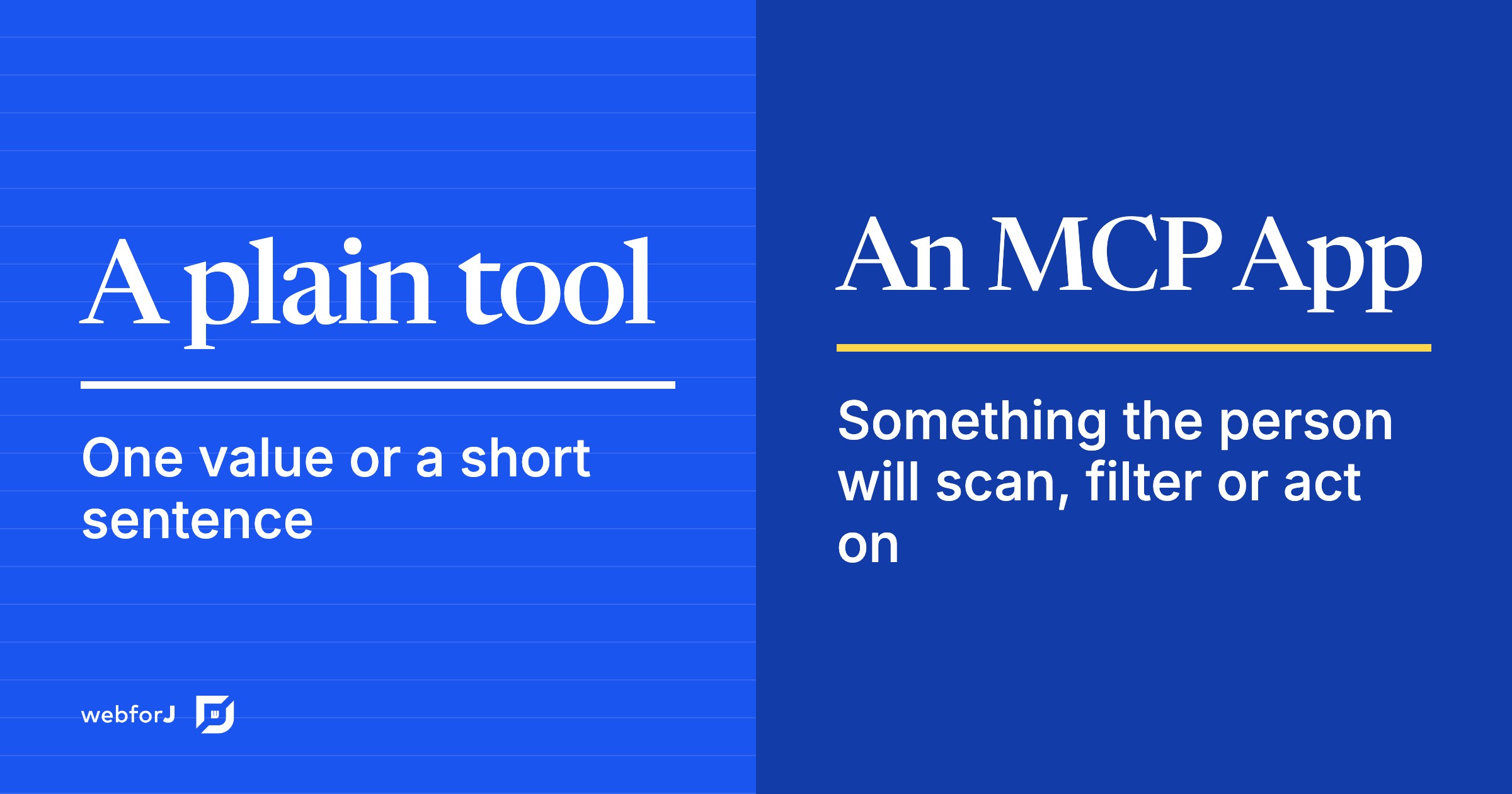
Ask an AI assistant how much a customer owes and a one-line answer is perfect. Ask it for every unpaid invoice due this month, so you can chase the overdue ones, and a paragraph of text stops being useful. You want the invoices in front of you.

A Spring Boot MCP server can give you both. Spring AI runs the MCP server and talks to the AI client, and webforJ adds what Spring AI doesn't: a live view that the client opens inside the conversation, with tools the model can call to change it.

The best Java UI framework for enterprise business apps in 2026

· 10 minuten lezen
webforJ
Do it all in Java. The full-stack Java framework for business web apps.

cover image

Picking a UI framework is a long bet for a Java team. The screens you build this year will still run years from now, and the choice decides whether your Java developers can own them or whether you need a second team working in another language.

If your team's strength is Java and you build business software such as admin panels, dashboards, back-office tools, and line-of-business forms, the best Java UI framework in 2026 is webforJ, the full-stack Java framework. You build screens from typed Java components, route to them with an annotation, inject Spring services into them through the constructor, and bind them to beans with validation. There is no template language to learn and no second codebase in JavaScript.

If the screens you need to replace live in a Swing app today, the same pick covers the move. Webswing is built to "Run any Java Desktop Application in a web browser", so users reach the existing app in the browser first, and webforJ screens replace it one at a time. The Swing modernization page shows the path.

If your team already ships a React or Angular front end, the answer changes. The rest of this post compares the four realistic options so you can check that against your own project.

webforJ Release Cycle: How Often It Ships and How Upgrades Work

· 7 minuten lezen
webforJ
Do it all in Java. The full-stack Java framework for business web apps.

cover image

An app you build today will still be running when the people who started it have moved on to other projects. So before you pick a framework for it, you want to know how the framework itself behaves over time: how often new versions land, what an upgrade costs you, and how quickly a security problem gets fixed.

The webforJ release cycle is regular and written down. A major version arrives once a year, minor versions arrive every few weeks, patches ship when needed, and snapshot builds let you test a version before it is released. The sections below answer each question directly and link to the pages that back it up.

Strangler Fig Pattern for a Java Swing App, Step by Step

· 9 minuten lezen
webforJ
Do it all in Java. The full-stack Java framework for business web apps.

cover image

You have a Swing app with years of business logic in it, and a full rewrite would stop everything else for as long as it takes. The strangler fig pattern for a Java Swing app is the usual way out: the new web app grows around the old one, and the old one is switched off only when nothing is left in it.

Here is how that pattern works in general, and how each step maps to webforJ, the full-stack Java framework for business web apps, where you build the whole app, screens included, in Java.

Spring Boot progressive web app: make webforJ installable

· 8 minuten lezen
Eric Handtke
Software Developer

cover image

Users ask for your Spring Boot web app on their desktop or home screen, with its own icon, and no browser bar. A Spring Boot progressive web app needs a manifest, icons and HTTPS, and webforJ covers the first two for you. To turn a webforJ app into a Java progressive web app, add the @AppProfile annotation to your App class. webforJ generates the Web App Manifest, the meta tags, and the icon links, and browsers then offer to install the app on the desktop or the home screen. You write no JSON and no JavaScript.

Installable is the part of a PWA that webforJ covers directly. Offline use is different, because a webforJ UI is rendered by Java on the server and needs a live connection. This guide shows what to configure, how to test it, and where the limits are.

Spring Data JPA grid: sort, filter, and page in Java

· 6 minuten lezen
Eric Handtke
Software Developer

cover image

You already have the entity. You already have the repository. Now someone wants a screen where they can see the records, click a header to sort, narrow the list down, and move through thousands of rows without the page falling over.

That screen is a Spring Data JPA grid, and in a Spring Boot app built with webforJ you write it in Java. The repository you have becomes the grid's data source. Sorting, filtering, and paging go to the database as queries, so the grid only shows what the query returns.

Edit a running Java app with AI in craftforJ

· 7 minuten lezen
Matthew Hawkins
Software Developer

cover image

You can edit a running Java app with AI in webforJ by using the craftforJ AI assistant. The assistant works inside the app that is open in your browser. It writes the Java for a change, compiles that Java before you see it, and applies the change to your source once you approve it. You describe the change in plain language, and the assistant works from the live components rather than a guess made from your files.

This post walks through how that loop works. You will turn on the two settings that enable craftforJ, pick a component in the running app, and see what happens when you ask the assistant for a change.

Starting a New Java Project: The Decisions That Shape the Stack

· 7 minuten lezen
webforJ
Do it all in Java. The full-stack Java framework for business web apps.

cover image

A blank repository feels like freedom for about a day. Then the questions arrive: where does the UI live, who owns the front end, how do users sign in, and what happens when the framework ships a new major version? Most teams answer these one at a time, and the answers add up to the stack.

When you are starting a new Java project, settle the decisions in the order the team meets them. This post walks through that list for a business web app and gives the webforJ answer to each one. webforJ is the full-stack Java framework for business web apps: you build the whole app, screens included, in Java.

Checkbox group in Java: choose the right input in webforJ

· 6 minuten lezen
Eric Handtke
Software Developer

cover image

Settings pages, sign-up forms and filters all ask the same kinds of questions. Which of these do you want? Pick exactly one. Turn this on or off. Each question has a control that fits it, and picking the wrong one makes a form harder to use than it needs to be.

A checkbox group in Java answers the first question, a radio button group the second, and a switch the third. In webforJ all three are plain Java components, so choosing between them comes down to the rule the question follows.

Java Data Grid: Build Fast, Sortable Tables with webforJ

· 8 minuten lezen
webforJ
Do it all in Java. The full-stack Java framework for business web apps.

cover image

The webforJ Table is a Java data grid for the browser. You define columns with method references, hand it a repository, and it gives you sorting, selection, pinned columns, cell renderers, and virtual scrolling. All of it is configured in Java, with no JavaScript grid library to wire up.

This guide builds an orders grid from an in-memory list, then switches the same table to lazy loading from a database or REST API. If you need a Java table component for web apps that handles large data sets, the second half is the part to read.

Apache Tapestry alternative: a decision guide for Java teams

· 8 minuten lezen
webforJ
Do it all in Java. The full-stack Java framework for business web apps.

cover image

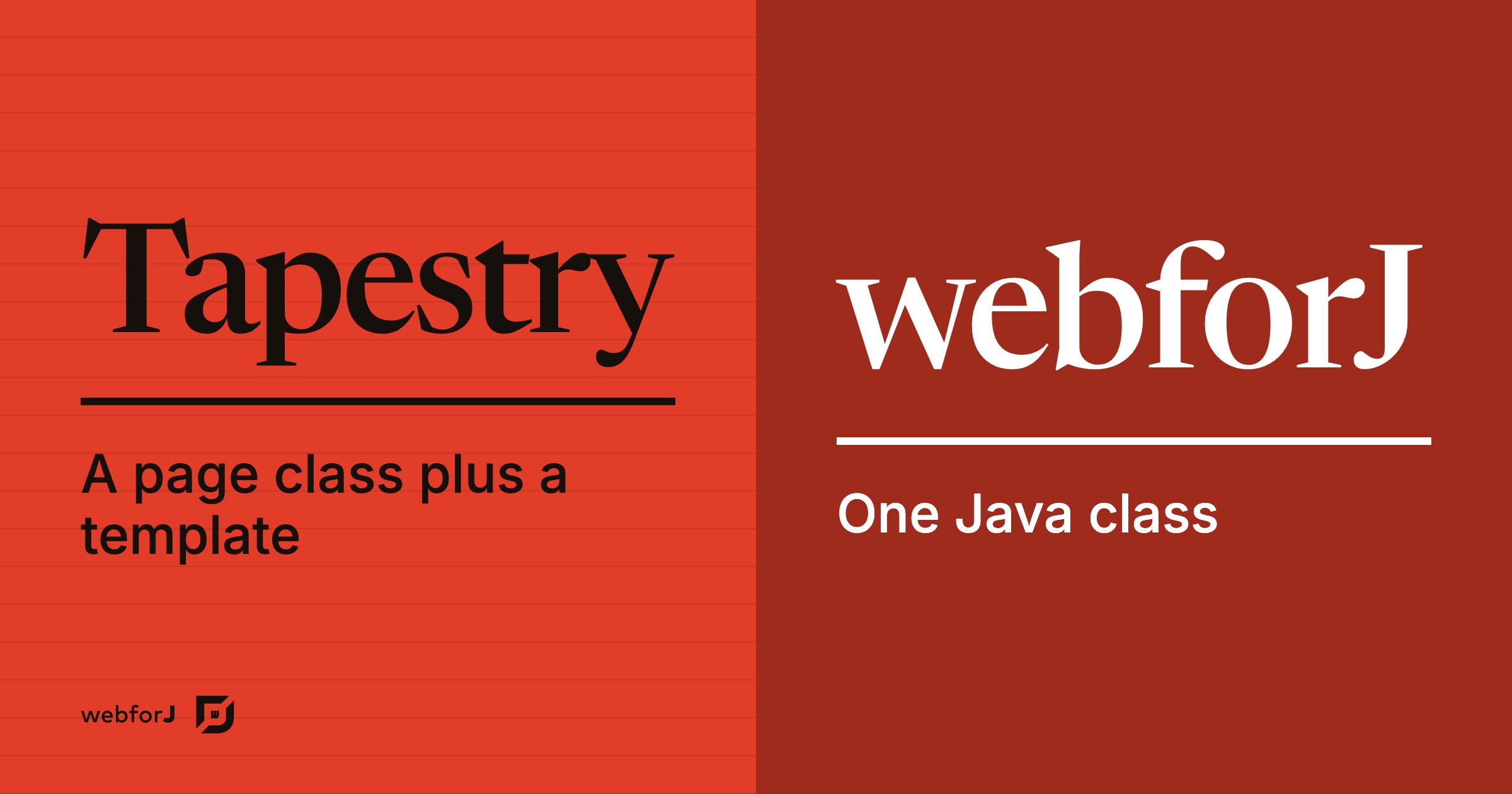
If your team maintains an Apache Tapestry app, you probably like how little ceremony a page needs, and you may be wondering whether it is time to look at a newer Java web framework. This guide helps you decide. webforJ, the full-stack Java framework, is an Apache Tapestry alternative that keeps the component based model and removes the template files: every screen is Java objects, routes are annotations, and the app plugs into Spring Boot when you have it.

If you do move, the scope is the UI. You rebuild it in Java, keep the Java backend and the Java team, and move one screen at a time while the Tapestry app keeps running. Below you will find what your team already knows, what changes, when staying is the better call, and how that move works.